
EU Commission publishes long-awaited ETS reform, MBB insists on better safeguards for Island Member States
- Latest News, MBB News
- Latest News, MBB News
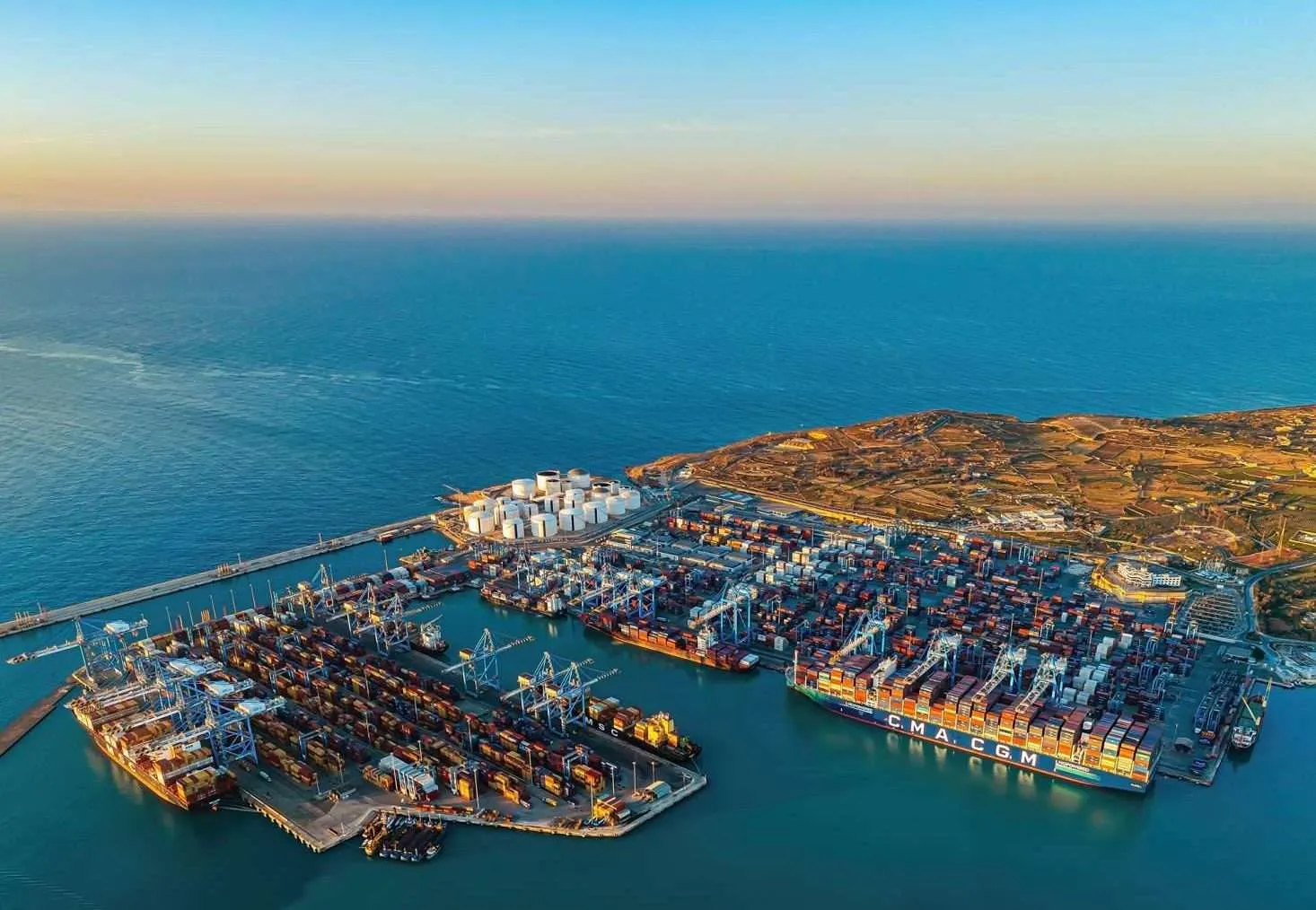
17 July 2026 – The European Commission presented its long-awaited proposal to revise the EU Emissions Trading System (ETS) Directive. The Malta Business Bureau (MBB) calls for the re-design of EU ETS to deliver for all Member States, especially those in the periphery. MBB has proposed concrete amendments to prevent disproportionate harm to Malta and other island Member States. In line with MBB amendments, the Commission has proposed a reduction in the transhipment activity threshold from 65% to 50% providing relief for Maltese transhipment against North African ports.
The review was tasked by European Council conclusions of 19 March 2026, with reducing the volatility of the carbon price and mitigating its impact on supply chain costs, while preserving the ETS’s role in the climate transition. It nonetheless falls short of proposing tangible measures which will reduce costs for maritime and aviation operators.
MBB’s CEO Mario Xuereb said: “. MBB supports ambitious decarbonisation, but the structural realities of island states, higher transport and energy costs, limited economies of scale, and import dependence, must be reflected in the design of the EU ETS. Without targeted safeguards, the reform risks overburdening Malta with the costs of decarbonisation, without reaping any of the benefits.”
Malta, as an island Member State with no land connection to the rest of the Single Market, depends entirely on maritime and air links for the movement of goods and people. The MBB has repeatedly flagged that vessels carrying the majority of goods consumed in Malta return to the mainland more than half empty, meaning the full ETS cost is absorbed disproportionately across the round trip. Decarbonisation measures in both sectors are far from being feasible to be implemented, and until then, Malta will be left to foot the bill.
MBB has submitted concrete textual amendments to the Commission, including partial derogation from the maritime ETS surrender obligation for routes serving small islands with no fixed link to the mainland, and an equivalent free allocation for aviation to and from island airports of less than 10,000 km².
MBB had also proposed extending the definition of a “neighbouring container transhipment port” from 300 to 1,000 nautical miles, alongside lowering the threshold from 65% to 50%, which was accepted. While the Commission did not extend the radius itself, it introduced a further anti-evasion safeguard: any port within 150 nautical miles of an EU port with adequate transhipment infrastructure, will now qualify as a “neighbouring transhipment port” regardless of its transhipment share. MBB welcomes this additional layer of protection against the relocation of transhipment activity to nearby non-EU ports.
MBB’s Brussels-based Nigel Caruana said: “This ETS review is the first real test of the Commission’s commitment to tailor policies to island realities. The measures MBB has proposed would mitigate the impact on essential connectivity while preserving the environmental integrity of the system.”
Additional Information on the EU ETS
The European Commission published its EU ETS reform proposal on 17 July 2026. The reform, the first legislative proposal shaping the post-2030 climate architecture, adjusts the Linear Reduction Factor, phases out free allowances, strengthens the Market Stability Reserve, and considers extending the system to waste and extra-EU/EEA flights. It also addresses revenue use and the potential inclusion of carbon removals and international credits.
The EU ETS was extended to maritime transport from 2024 and reached full compliance from January 2026, with shipping companies now required to surrender allowances for 100% of verified emissions on qualifying voyages. Aviation allowances moved to full auctioning from 2026, following the phase-out of free allocation.
Malta, as one of three island Member States alongside Ireland and Cyprus, faces structural economic constraints recognised explicitly in Article 174 of the Treaty on the Functioning of the European Union (TFEU), which identifies islands among regions “suffering from severe and permanent natural or demographic handicaps.”
The Commission’s ETS 2021 Impact Assessment (SWD(2021) 601 final) recognised that extra-EU imports and exports transported by sea account for over 50% of the total value of traded goods for island countries such as Malta, Cyprus and Greece, and that these countries and regions are among those most exposed to changes in shipping activity resulting from the ETS. Transport costs can exceed mainland benchmarks by up to 300%, and geographic isolation imposes GDP per capita costs estimated between 7% and 36%.
BusinessEurope and several Member States have highlighted competitiveness concerns, while others have called for greater ambition.
The MBB, marking its 30th anniversary this year, will continue to advocate the Maltese government, the EU Commission, MEPs and BusinessEurope counterparts to ensure the final text of the ETS revision take proportionate account of the structural realities faced by island Member States.
ENDS
The Malta Business Bureau is the EU business advisory organisation of The Malta Chamber and the Malta Hotels and Restaurants Association (MHRA). It is also a partner of the Enterprise Europe Network.
Share this article on socials:
30 years of powering business excellence.
Related
More related news.
October 7, 2026
- Latest News, MBB News
MED9 Summit: MBB and Mediterranean business federations demand action on islands strategy
September 16, 2026
- Latest News, MBB News
MBB Statement on the 2026 State of the EU Address
June 10, 2026
- Latest News, MBB News
Commission recognises island challenges, MBB now calls for tangible solutions
April 16, 2026
- Latest News